
4月份活动记载
常州市教科研课题研究活动情况登记表
|
时间 |
2012.4.10 |
地点 |
多媒体教室 |
参加对象 及应到人数 |
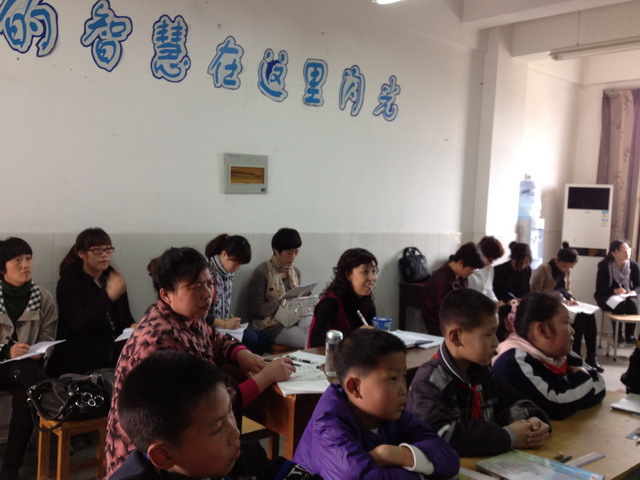
全区英语老师 |
实到人数 |
25 | |
|
主持人 |
王顺亚 |
活动 形式 |
课堂讨论 | |||||
|
研究的目的 (范围、方法) |
目的:探索学生记忆单词的方法 方法:实践研究 | |||||||
|
主要内容(不够填写另附纸) |
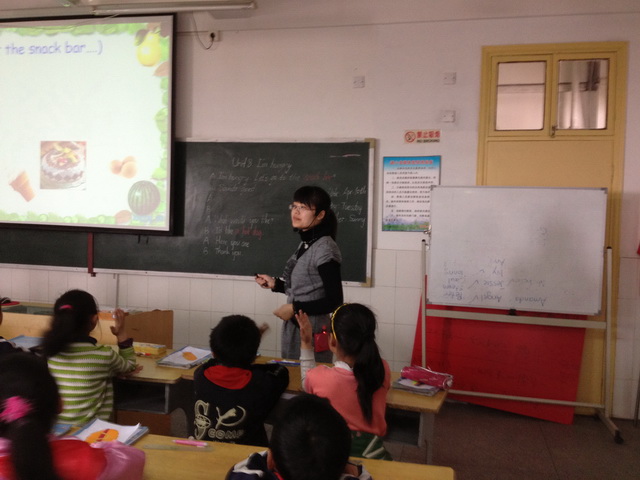
3B Unit8 I’m hungry第一课时教案 Step1 Greetings 1. T:Good morning.How are you? S:Fine,thank you. T:What’s this in English? S:It’s a pencil. T:Is this your pencil? S:Yes,it is./No,it isn’t. 2. What’s …plus/minus…? What date is it today? 3. 出示卖火柴的小女孩 T: Boys and girls, are you happy today? S: Yes. T: But the little match girl is not happy. Maybe she is cold and hungry. Step3 Presentation 1. 教新单词hungry. (bus——hungry)并造句。 2. T:Are you hungry? S:Yes. T:I’m hungry too. Let’s go to the snack bar(读几遍). 出示小吃店的图片,并介绍:We often buy food at the snack bar. T: xxx, let’s go to the snack bar? S: OK. |
|
|
T:(教师邀请1~3名学生后)Who can invite me to the snack bar? S:Miss Wang,let’s go to the snack bar. T:Sounds good.(教这句话) Ask and answer. A:Let’s go to the snack bar. B:Sounds good! 3.教句型:What would you like? T:出示许多已学食物的图片。Now we’re at the snack bar.What can you see at the snack bar? S:I can see …. T:So much food!What would you like? S:A …,please.开火车对话练习 4.T:I’m hungry.Let’s go to the snack bar. S:Sounds good! T: What would you like? S: A …,please. Work in pairs. 5.通过新品上市教四个新单词,把五样新品出示在屏幕上,通过小老师的活动环节,让小老师教读新单词 Eg: T: What would you like? Maybe you can use this sentence “I’d like…”教读该句子 |
|
|
T: Oh, you can read this new word, so you’re the little teacher. Come here and teach us this new word. S:(走上讲台,选择要教的单词卡片,领读单词) T: (老师再根据读音规则具体讲解单词)先出示dog让学生读,体会元音o的发音,再出示hot,让学生根据读音规则拼读新单词,之后扩充词汇,让学生根据hot造词组,再用hot dog造词组和句子。 同法教授其他的新单词 Step3 Consolidation 1.Play a game:Magic eyes What’s missing? 2.say a chant What,what,what would you like? I’d,I’d,I’d like a sandwich. Here,here,here you are. Thank,thank,thank you very much. 学生自编chant 3.综合对话 A:Good morning/Hello/Hi! B:Good morning/Hello/Hi! |
|
|
A:I’m hungry.Let’s go to the snack bar. B:Good!Great!But how? A:By car. B:OK.Let’s go. (At the snack bar…) A:What would you like? B:I’d like a hot dog. A:Here you are. B:Thank you. 3. 拓展: T:In our China, there are some children need our help. (出示希望工程的图片)They can’t go to school like us. Because their families are very poor. They don’t have enough money to buy food, clothes and school things and so on. So we should do our parts to help them. There are four shops here. Now I want to buy some clothes. So I want to go to the clothes shop. 出示对话,老师和学生示范。 Work in pairs 假如你在以下商店,你会和你的朋友或家人说什么? (1)fruit shop (2)supermarket |
|
|
(3)snack bar (4)clothes shop 学生选择一商店对话练习,并展示 T:We have many kinds of ways to help them. We can give them some clothes or some wishes, and we can earn the money by ourselves to help them. For example, we can sell the book we have read, sell the bag we have used and so on. So please remember when the others are in trouble, please take out your hands. Today I’ll teach you a proverb “It’s happier to give than to take” 领读谚语 Step4 Homework 1. Copy the words of Part B twice and recite these words. 2. Practice the dialogue with your partner after class. |
|
评 价 |
本节课教授的单词都是关于食品类的,学生在3A的时候已经学习过一些了。所以本节课一开始,王老师设计了一个环节,让学生发散思维,将所有学过的食品类单词引出来,方便学生归纳整理。因此在记忆过程中,把所学到的全部单词进行归纳、分类、整理,可以使其条理清晰,一目了解,然后再分别记忆。 |

 苏公网安备32041202001011